


Course of Expert in Urbanism and Urbanistic Discipline
Program director:
Dña. Rosa Mª Vidal Monferrer
Campus:
Online
Date:
September
LANGUAGE:
Español
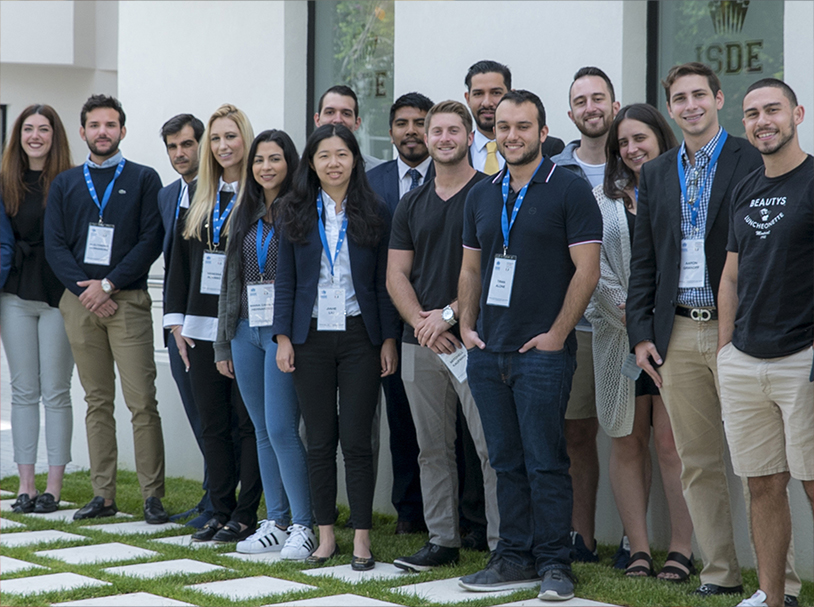
The future of cities is being designed today with legal and strategic vision.
The Expert Course in Urban Planning and Urban Regulation at ISDE is designed to train professionals who will lead the legal and technical transformation of urban spaces. This program prepares you to master the key regulatory frameworks governing territorial development, land use planning, urban licensing management, and the implementation of urban plans, both in the public and private sectors.
With a highly practical approach and a faculty composed of practicing lawyers, architects, and experts from public administrations, specialized law firms, and companies in the sector, you will gain the tools needed to advise on land reclassification processes, expropriations, urban compensations, and the resolution of conflicts arising from urban legislation. Additionally, the program addresses the most current topics, such as adapting cities to the Sustainable Development Goals (SDGs), affordable housing regulation, digitalization of urban planning processes, and management of urban regeneration projects. Are you ready to become the expert that cities, developers, and administrations need to build sustainable, lawful, and efficient urban environments?
COLLABORATE
GREAT CENTERS

DO YOU WANT TO KNOW MORE?
REQUEST MORE INFORMATION
K
A global alumni community specialized in Law
In rankings for legal education and for faculty
%
Employability at the top firms and law offices
Introduction and objectives
The Expert Course in Urban Planning and Urbanistic Discipline trains the participants to design and apply land use and urbanistic plans, as well as to know the necessary actions to put them into practice.
We will analyze and solve problems related to the subjects of urban planning, management, execution and urban discipline, designing adequate solutions. All of this with a view to planning an urban development aimed at creating intelligent cities, the so-called Smart Cities. The creation of cities that advocate the incorporation of technology and the best efficiency and sustainability of their services, promoting the use of clean energy and creating easier cities for their citizens.
Structure, location and calendar
PROGRAMME: 21 online sessions.
DURATION: from September to October.
In addition, it is complemented by a four-hour in-person workshop, which will be held at the ISDE Madrid headquarters, located at Calle Serrano 208.
Career Opportunities
- Lawyers who practice or intend to practice in urban and environmental law with technological application.
- Architects, engineers and economists.
- Land and property development managers.
- Environmental consultants.
- Other technical, legal and financial profiles who practice or intend to practice in urban and environmental law with technological application.
ACADEMIC PROGRAM
BASIC PRINCIPLES OF TERRITORIAL AND URBAN PLANNING
- Constitutional principles governing territorial and urban development
- General principles of urban planning
- Distribution of powers between the State and the Autonomous Communities
- Current legislation
- List of citizens’ rights and duties in matters of territorial and urban development
- Foundations of land-use regulation
- Public land assets
URBAN PLANNING
- Urban planning
- Comparative study of the Autonomous Communities
- Plans: processing, approval and validity
- The General Urban Development Plan (PGOU)
- Partial Plans
- Special Plans
- Interior Reform Plans
- Plans and actions on Non-Developable Land
- Catalogues and Detailed Studies
- Suprarregional territorial actions
- Territorial Planning Justification Document
- Out-of-planning regime: semi-consolidated areas
URBAN DEVELOPMENT MANAGEMENT
- Urban development management: basic concepts
- Urban planning obligations in urban transformation actions
- Implementation systems in Spanish urban planning law
- Land readjustment techniques
- Implementation systems
- Urban planning agreements
- Access to the Land Registry for urban development actions
- Integrated Action Programs: legal, technical and economic aspects
- Processing of Integrated Action Programs
- Development rights and allocation areas: economic valuation
- Land uses and building typologies: weighting coefficients
- Isolated Action Program (PAA)
- The obligation to build and compulsory development
- Notarial intervention in urban planning activity
- Urban development actions and the Land Registry in expropriation and land readjustment processes
URBAN VALUATIONS
- Technical perspective
- Legal perspective
FINANCIAL LIABILITY
MODULE 2: URBAN CONTROL, PROMOTION AND ENFORCEMENT: LICENSES, INFRINGEMENTS, PROCEDURES
- Urban planning licenses: acts subject to licensing
- Jurisdiction, procedure and effects of urban planning licenses
- Sector-specific licenses and their processing
- Licenses related to public events and activities
- Protection of urban planning legality. Urban inspection
- Urban planning infringements and sanctions
- Criminal infringements and penalties
- Protection and restoration of urban planning legality
- Issues related to the enforcement of judgments in urban planning matters
- Urban enforcement. Sanctioning procedure in urban planning matters
- Judicial bodies, jurisdiction and standing in administrative litigation. Claims of the parties
- Administrative Litigation Procedure. Single-instance or first-instance proceedings. Summary proceedings
- Appeal system
- Enforcement of judgments and special proceedings
Upon completion of Modules 1 and 2:
On-site Urban Planning Workshop
Joaquín Jalvo Mínguez. Urban planning architect. Jalvo Studio.
The workshop will be based on the General Urban Development Plan of Puerto de la Cruz and its amendments and revisions.
Following the logical sequence of the urban planning process and its subsequent management, the General Planning Workshop is conducted with the main objective of developing an initial draft of a General Planning Advance Document for a specific municipality.
This work, carried out at municipal level, will focus on formulating different responses to the identified urban issues and subsequently proposing a comprehensive planning framework for the entire municipality in accordance with current urban planning regulations.
The objective of this Workshop is to enable participants to accurately apply the concepts acquired to a specific territory.
FACULTY
- Alberto Palomar Olmeda – Partner, Public Law Department, BROSETA.
- Felipe Iglesias González – Consultant, Uría Menéndez. Full Professor, Administrative Law Area, Autonomous University of Madrid.
- Fernando Cacho Barbeira – Partner, Public Law Department, BROSETA.
- Francisco Javier Fuertes López – PhD in Law. Judge.
- Gerardo Roger Fernández – Architect. Professor and Member of the Pascual Madoz Institute at the Carlos III University of Madrid.
- Gil Manuel Perea – Lawyer, Public Law Department, BROSETA.
- José Daniel González – Senior Lawyer, Public Law Department, BROSETA.
- Rosa María Vidal Monferrer – Partner and Head of the Public Law Department, BROSETA. Director of the Master’s in Urban Planning, Environment and Smart Cities at ISDE – BROSETA.
- Sofía Cabedo Usó – Senior Lawyer, Public Law Department, BROSETA.
- Venancio Gutiérrez Colomina – Secretary General of the Hon. City Council of Málaga.
*The faculty is subject to change.
ACCREDITED DEGREE
Once the relevant Program has concluded and ISDE has verified that the STUDENT has completed their work satisfactorily, the STUDENT will receive the corresponding Degree certificate for each PROGRAM.
In compliance with current legality and, specifically, as set forth in article 4.4 of decree 84/2004, it is noted that ISDE’s programs are professionally oriented and therefore, unless explicitly stated otherwise, they are courses that do not lead to the acquisition of a title with official value, but to that of a proprietary title from ISDE.