


Building and Housing Expert Course
Program director:
Dña. Rosa Mª Vidal Monferrer
Campus:
Online
Date:
February
LANGUAGE:
Spanish
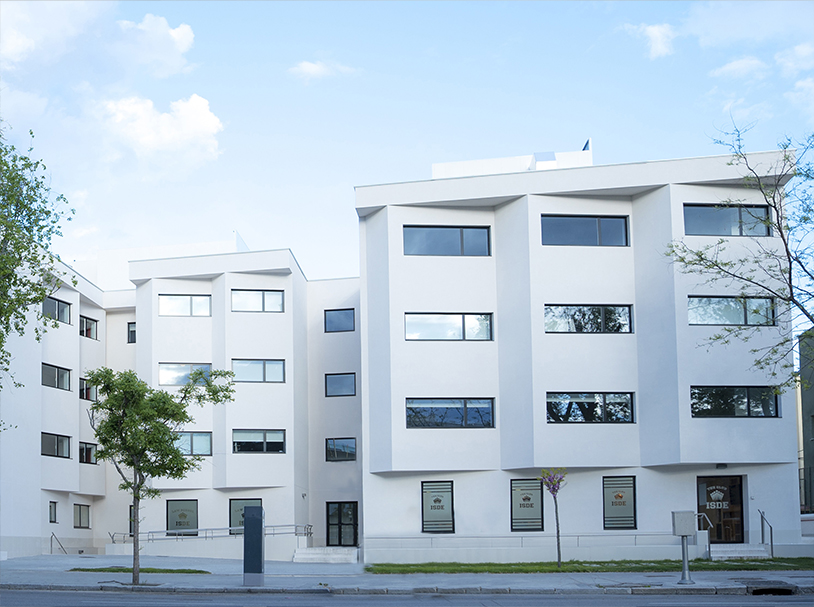
Building and housing law drives the creation of fair and safe cities.
The Expert Course in Building and Housing is designed to train legal professionals with a solid understanding of the regulatory framework governing construction, urban planning, and the legal relationships related to housing access and use. This program allows you to integrate specialized knowledge of property, contracts, civil liability, urban planning, and technical regulations, providing you with the tools to act precisely in building projects and in the protection of housing-related rights.
Through a practical, case-study–oriented methodology, you will develop the skills to provide reliable advice on contracting processes, risk management, regulatory compliance, and conflict resolution in the real estate and construction sectors. This specialization positions you as a professional capable of offering comprehensive legal solutions in a sector fundamental to social and economic development.
COLLABORATE
GREAT CENTERS

DO YOU WANT TO KNOW MORE?
REQUEST MORE INFORMATION
K
A global alumni community specialized in Law
In rankings for legal education and for faculty
%
Employability at the top firms and law offices
Introduction and objectives
The building sector is one of the main economic sectors, highlighting its direct and indirect quantitative importance in the economy and in employment, as well as its contribution to the development of networks, infrastructures and equipment for the improvement of the quality of life and territorial and social cohesion.
The Expert Course on Building and Housing studies the essential aspects of the building process, analysing the obligations and responsibilities of the agents involved in this process, as well as the necessary guarantees for its adequate development.
The rehabilitation and reform segment, both for buildings and housing, is one of the segments with the greatest potential for reactivating activity, given the demographic evolution in Spain and the need to adapt the housing and equipment stock to the new environmental, energy and social requirements.
Structure, location and calendar
Programme: 9 online sessions.
Duration: from February to March.
In addition, it is complemented by a four-hour in-person workshop, which will be held at the ISDE Madrid headquarters, located at Calle Serrano 208.
Career Opportunities
- Lawyers who practice or intend to practice in urban and environmental law with technological application.
- Architects, engineers and economists.
- Land and property development managers.
- Environmental consultants.
- Other technical, legal and financial profiles who practice or intend to practice in urban and environmental law with technological application.
ACADEMIC PROGRAM
BUILDING REGULATION
- The construction process: agents, responsibilities, guarantees. Legal aspects.
- The construction process: basic requirements for building. Technical code. Technical aspects.
- The technical project: basic and execution projects. Quality control. The building logbook.
- The professionals involved in construction: Project and construction management. Responsibilities.
- Municipal ordinances: Infractions.
- The right to build in Spanish urban planning
- Requirements: compliance with urban planning duties, basic land conditions, plot status, permits.
- Subjective competence
- The title to build: ownership, assignment, change of project, surface rights, air rights, and administrative concessions.
- Non-compliance with duties: discipline and penalties, substitute execution.
- Infrastructure: water, electricity, telecommunications, gas, photovoltaic energy supplies.
- Processing construction, urbanization, and installation projects.
- Intermediation in real estate contracting: Consumer protection.
- The horizontal property regime: common and private elements. Owners’ associations.
URBAN REHABILITATION AND REGENERATION
REAL ESTATE MANAGEMENT
- REAL ESTATE CONTRACTING
- Typical contracts.
- New contracts.
At the end of Module 4
June – In-person Workshop on Horizontal Property
Lourdes Barriuso – Regulatory & Public Affairs Officer, Sareb.
FACULTY
- Angel Valero Fernández-Reyes – Property Registrar in Madrid.
- Carmen Moreno Balboa – Head of Urban Planning in Villanueva del Pardillo. Municipal Architect. Head of the Urban Planning and Technical Services Department.
- Gerardo Roger Fernández – Architect. Professor and Member of the Pascual Madoz Institute at Carlos III University of Madrid.
- José Antonio Granero Ramírez – Architect and Founding Partner. CGR Architects and Paralelo 39 Ideas and Projects.
- María López Martínez – Legal Advisor in urban planning at the City Council of Madrid for fourteen years and eight years as a private urban planning consultant. Specialist in expropriations and urban regeneration.
- María Luisa Guardo Galdón – Lawyer
- Rafael del Olmo Garrudo – President of the Official Association of Property Administrators of Seville, Vice Secretary of the National Council.
ACCREDITED DEGREE
Once the relevant Program has concluded and ISDE has verified that the STUDENT has completed their work satisfactorily, the STUDENT will receive the corresponding Degree certificate for each PROGRAM.
In compliance with current legality and, specifically, as set forth in article 4.4 of decree 84/2004, it is noted that ISDE’s programs are professionally oriented and therefore, unless explicitly stated otherwise, they are courses that do not lead to the acquisition of a title with official value, but to that of a proprietary title from ISDE.