


Master in Biotechnology and Law
Program director:
Campus:
Madrid
Date:
September
LANGUAGE:
Spanish, English
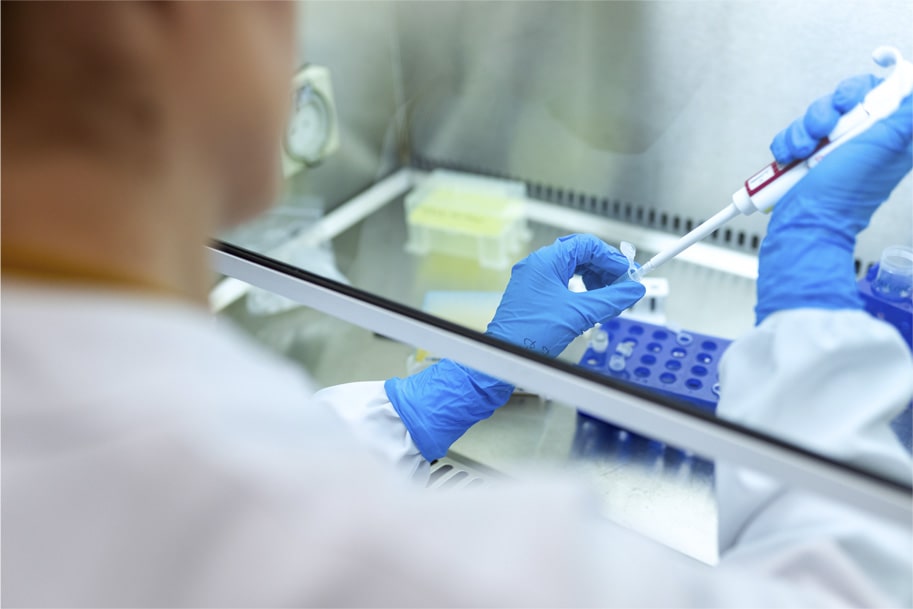
Biotechnology is advancing at an accelerated pace, law must stay one step ahead.
ISDE’s Master in Biotechnology and Law is designed to educate the professionals who will lead at the intersection of scientific innovation and the legal framework—an area where every technological breakthrough raises new legal and ethical challenges. Delivered by practicing sector experts, this pioneering program prepares you to master the key legal aspects of biotechnology: from patent protection and technology transfer to the regulation of advanced therapies, CRISPR gene editing, and the ethical dilemmas of artificial intelligence applied to health.
With a strongly hands-on methodology, you will take part in real projects alongside biotech companies and specialized law firms, gaining the skills needed to advise on mergers and acquisitions, regulatory compliance, intellectual property, and international advocacy. You will also explore highly topical issues such as the regulation of rare diseases, surrogacy, and genetic data governance—always from a global perspective and with a focus on EU legislation. Are you ready to become the expert that companies, researchers, and institutions need to drive innovation with legal certainty?
DO YOU WANT TO KNOW MORE?
REQUEST MORE INFORMATION
K
A global alumni community specialized in Law
In rankings for legal education and for faculty
%
Employability at the top firms and law offices
Introduction and objectives
Biotechnology has established itself in its own right as one of the fastest growing sectors with the most profound impact on the lives of people and societies.
Sectors such as pharmaceuticals and healthcare, agriculture, food, industry and even the IT sector have biotechnology as their biggest bet for innovation, development and the future.
This immense, growing and varied sector of the economy needs well-prepared professionals to work on aspects ranging from access to markets, patents, intellectual property, technology transfer, to issues such as lobbying before national and international bodies.
The master’s degree in biotechnology and law, pioneering in its genre and innovative in its maximum expression, will prepare you to be that highly demanded professional in this sector. It will include practical teaching provided by some of its most prominent figures and professional internships that will introduce you directly to working in this exciting world.
Sponsor
Structure, location and calendar
On Mondays, students are provided with videos and study material to work with throughout the week.
On Friday afternoons (Spanish time) the classes take place in face-to-face or Streaming format. The preparation of the material throughout the week allows these classes to have a much more practical and Socratic format.
Students who so wish may also contract an internship, with a duration of between 3 and 6 months.
In all cases, students will be required to complete a Master’s thesis (TFM).
Career Opportunities
- In-house legal counsel of a biotechnology, pharmaceutical, agrobiotechnology or health company.
- Legal counsel in the area of scientific patents.
- Legal counsel for OTRIS (Technology Transfer Organizations). Universities, Technology Centers or Science Parks
- Advisor to scientific institutions and associations: (National Center for Biotechnology, CNIO, CNIC, CIB, ONT, Carlos III Health Institute, CSIC, Ramón y Cajal Institute, BIOSIM; AESEG; ASEBIO; FARMAINDUSTRIA; ANOVE, etc.)
- Legal counsel for Scientific Foundations (Botín Foundation, Antama Foundation, FECYT … etc.)
- Specialist in mergers and acquisitions of biotechnology companies
- Advisor in bioethics.
- Responsible for Market Access
- International drug licenses
- Strategic consultant in biotechnology consultancy firms.
- Professional College Advisor
- Compliance officer in biotechnology companies.
- Specialist in financing innovation (Special emphasis on European projects, ENISA, CDTI, NEOTEC)
- Director of European biotechnology projects.
- Responsible for biotechnology business development
- Director of institutional relations in a biotechnology company
- Legal advisor in biotechnology Start Ups
- Venture capital and biotechnology lawyer
- Advisor in second rounds of financing,
- Specialist in lobbying for biotechnology companies or associations
- Legal counsel for affected patient associations or platforms
- International surrogate motherhood legal advisor.
- Legal counsel seeking alternative financing, crowdfunding, crowleading, MAB IPO.
- Director of biotechnology business development.
- Legal counsel for biofuel companies, alternative energies (Algae, waste, bioremediation, etc.)
- Advisor for raising next generation funds (Project NextGeneration EU: New European funds for the development of the economy).
- Biotechnology companies in the sector: animal health, bioinformatics and nanobiotechnology.
- Biofuels sector, producer associations, administration (CIEMAT; IDAE).
- Umbilical cord blood banks.
- Exercise of teaching, design of seminars, meetings and forums of the biotechnology sector. (BIOSPAIN)
ACADEMIC PROGRAM
I/Introduction to biotechnology.
- Definition of biotechnology, evaluation of the area.
- Various types of biotechnology: Red, blue, white and green.
- The biotechnology clusters.
II/The Spanish biotechnology sector.
- Situation, background and perspectives.
- Investment in r & d of biotechnology companies. Challenges, challenges and problems of the sector.
- Environmental conditions, more developed regions, talent and diversity.
- Commercial contracts: purchase and sale of biotechnology companies. Mediation and guarantee contracts. Contracts in the securities markets.
- M&A: strategies, operations, alliances. Hybrid operations.
III/Financing of biotechnology
- Private financing instruments: venture capital, first round of financing, crowdfunding, crowdleading.
- Attraction of international financing.
- Fundraising in capital markets. Bolsa, MAB, Continuous Market.
- Complementary financing: loans and equity participations.
- Public financing instruments. CDTI, AEI, Enisa, Neotec.
- European financing.
- Regional financing.
IV/Regulatory Environment / Market Access.
- Legal security in the implementation of new technologies and products. European legislation.
- New genetic editing techniques.
- License and distribution agreements, international implementation, international alliances.
- Regulations applicable to the registration of medicines, nationally and internationally.
- Agenda 2030, sustainable development goals and biotechnology.
V/Intellectual Property Patents.
- The patent system and governance.
- Spanish office of the patents and brand.
- Data Protection
- Technology transfer
V/Bioethics
- Foundations of bioethics and ethics. Anthropological bases.
- Bioethics and research. Beginning and end of life.
- Experimentation with animals.
- Environment, Big Data and biotechnology.
- Transplants legal problem.
- Biomedical regulation in Europe.
- Regulatory environment of the clinical trial.
- CRISPR technology and the ethical-legal status of the human species.
- Legal aspects of vaccination.
- Regulation of surrogacy.
- Legal issues raised by rare diseases
FACULTY
Director: Martín Hernández-Palacio
Martín Hernández-Palacios is the director of the Master’s in Biotechnology and Law at ISDE, recognized as the best in Spain according to the Expansión newspaper ranking.
Hernández-Palacios is a lawyer at the law firm Alcor Asociados S.L. and has led the International Business School Aliter for twenty years, a leader in biotechnology business training.
He is a founding partner of the Association of Communicators in Biotechnology, director of the Biotechnology and Venture Capital Forum, and coordinator of the Innovation Financing Forum. He is also the promoter of the Women and Leadership in Biotechnology Forum, editor of the Biotechnology Yearbook in Spain, and coordinator of the Scientific-Business Dictionary of Biotechnology, sponsored by Madrid Biocluster.
In addition to collaborating with the Congress of Entrepreneurial Scientists, he has been a lawyer at the law firm Cámara Legal and a legal advisor to the Ministry of Public Works, Transport, and the Environment.
Furthermore, Martín Hernández-Palacios is the founder and president of the jury for the National Biotechnology Award.
Faculty:
- Don Miguel Ángel Llamas – CEO and founding partner of Start up Crazy Science & Business SL
- Don Carlos Giménez Rodríguez – Lecturer at the Bioethics Chair of the Pontifical Comillas University
- Doña Pilar de la Huerta – CFO, General Director, and Board Member at Biofrontera AG
- Don Francisco Manrique – Associate General Counsel at Insud Pharma. Responsible for Global Business Legal Advisory
- Doña Isabel Ariza Crespo – CEO of Ariza Capital & Law
- Doña Margarita de la Fuente – CEO of PATENTBOX INTERNACIONAL, S.L.
- Don Antonio Gómez-Almanza – Director of Legal Advisory, Compliance, and Data Protection at Dräger for Spain and Portugal
- Doña Paula González de Castrejón – Partner at DLA Piper Spain
- Doña Cristina Cortés – Senior Grants Manager at Ayming
- Don Lluis Montoliu – Deputy Director of the National Biotechnology Center
- Don Gonzaga Ruíz de Gauna – Manager of Biovegen
- Doña Elena Cebadera – Director of Patents and R&D&I Projects at LABORATORIOS FARMACÉUTICOS ROVI S.A.
ACCREDITED DEGREE
Once the relevant Program has concluded and ISDE has verified that the STUDENT has completed their work satisfactorily, the STUDENT will receive the corresponding Degree certificate for each PROGRAM.
In compliance with current legality and, specifically, as set forth in article 4.4 of decree 84/2004, it is noted that ISDE’s programs are professionally oriented and therefore, unless explicitly stated otherwise, they are courses that do not lead to the acquisition of a title with official value, but to that of a proprietary title from ISDE.